Know When It's Last Orders: What Pub Quiz Culture Can Teach Slot Players About Quitting
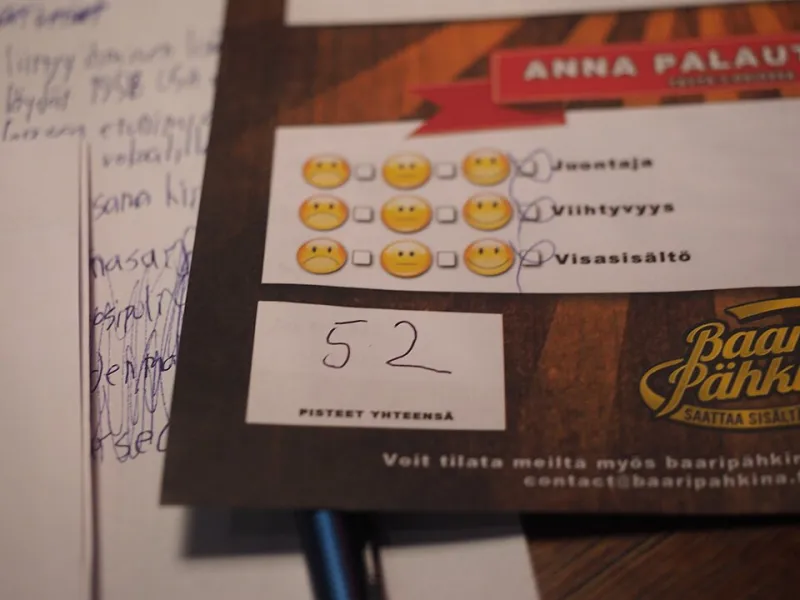
Photo: JIP, CC BY-SA 4.0, via Wikimedia Commons
There's a moment every pub quiz team knows. You're three rounds deep, you've botched the picture round, and someone at the table — it's always someone — says: "Right, we're getting that one back." What follows is usually forty minutes of increasingly unhinged guesses, a squabbled answer about 1990s one-hit wonders, and a score sheet that ends worse than it needed to be.
Every quiz regular recognises the pattern. And yet the same people will happily sit at an online slot at midnight, three hundred quid down, telling themselves the next bonus round will settle the score.
We think the pub quiz has quietly worked out some of the best gambling advice in Britain. It's just never been applied to the games that need it most.
Never Chase a Lost Round
Ask anyone who's played in a quiz league for years and they'll tell you the same thing: the rounds you lose are gone. The team that starts guessing wildly to "win back" the music round almost always loses the sport round too, because their judgment's shot.
"We had a rule after a bad winter season," says Denise, who runs a team in a league across three pubs in Leeds. "One bad round doesn't get avenged. You park it. You play the next round on its own terms. That rule won us more nights than any clever-clogs knowledge about rivers or chemistry."
Translate that to slots and it's essentially the entire case against tilt. The money you've lost this session doesn't care about the money you're about to lose. Chasing a deficit on a slot is mathematically identical to playing fresh — except your decision-making is now frayed, your stake sizes creep up, and the game's RTP hasn't moved an inch in your favour.
The quiz teams figured out, socially and painfully, that chasing is the only mistake that turns one loss into two. Slot players would do well to borrow the rule wholesale: a bad session doesn't get avenged. It gets parked.
Quit While You're Ahead — Because the Room Will Judge You
Here's the thing about the pub quiz that online gambling lacks: other people. If your team is ten points clear with one round to go and you start throwing out ridiculous answers to "have a laugh," your teammates will look at you like you've poured gravy in the pint. There's accountability.
The gambler at 11pm with a decent profit has no such audience. Nobody sees them hand back the winnings. The casino certainly isn't going to say anything. And the app is designed to make "one more spin" feel costless.
Marcus, a casual player from Cardiff who mostly sticks to £20 sessions, put it bluntly: "I only started finishing sessions in profit regularly when I started pretending my mate was watching. Sad, but it works. If I'm up and I keep spinning, that's me buying a round and then pinching change off the table. You just don't."
It's a slightly daft mental trick, but it points at something real: the reason quiz teams bank their leads isn't discipline. It's social consequence. If you can't bring an audience to your gambling, you have to build the consequence yourself — a withdrawal trigger, a set exit time, a rule you'd be embarrassed to break in company.
Know Your Exit Time Before You Sit Down
The best-run quiz teams decide when they're leaving before the first question. Not because they're no fun, but because the night has a shape. Two hours, then home. The teams that stay "until it gets good" are the ones still there at closing time, arguing over the tiebreaker, wondering where the evening went.
Session limits work the same way, and the evidence for them is far better than the evidence for most slot "strategy." Decide your stake, your time, and your walk-away point before the first spin — when you're calm — rather than mid-session, when every instinct is compromised. It's the gambling equivalent of agreeing the last orders round in advance.
And crucially: an exit time applies whether you're up or down. The quiz team leaving at ten o'clock doesn't linger because they're winning. They leave because it's ten o'clock. If your rule only survives bad sessions, it isn't a rule. It's a mood.
The Score Sheet Doesn't Lie
Quiz teams review. They know their average score, their best rounds, their weak topics. That's not luck management — it's honest record-keeping, and it's exactly what most slot players never do. Check your deposit history. Look at your actual results over the last three months, not your memory of the last three spins. The score sheet, like the quiz, doesn't care how it felt.
Final Answer
None of this changes the maths of slots — the house edge is the house edge, and no quiz wisdom alters an RTP. But the pub quiz principle was never about beating the game. It's about protecting the player from themselves: park the bad round, bank the good one, leave at the agreed time.
Britain's quiz leagues worked this out years ago, in smoke-free rooms, for the price of a packet of pork scratchings. It might be the best free strategy session available — and unlike a bonus, there's no wagering requirement.
If your sessions have stopped feeling like a night out and started feeling like a chase, take a break. And if gambling's stopped being fun, GamStop and BeGambleAware are there, no tiebreaker required.